









Food fraud has damaged New Zealand’s reputation before. Now that cost-effective, internationally standardised FoodScreener technology is available, we could deter it from happening again.
Six times more mānuka honey is sold globally than is produced in New Zealand. The most likely explanation for this is food fraud, with mānuka honey being diluted, substituted or mislabelled. A European Commission investigation published in 2023 found that close to half of all honey imported into the EU was suspected to be fraudulent.
Food fraud is accelerating around the world, and poses a significant threat to New Zealand, targeting many of the premium products we export, including honey, wine, fruit and olive oil. The scale of the problem has been vastly under-reported, often revealed only by a whistleblower or poor handling of confidential paperwork.
That is starting to change.
Globally, enforcement is tightening and systematic testing for authenticity is becoming the norm. In Germany, regulations require 5% of all retail food products to be tested each year. After facing fraud scandals, India now routinely tests its honey exports to protect its trade relationships. In North America, retailer Costco now autheticates all olive oil after it faced a lawsuit over mislabelled products, and Canadian retailers are fined for mislabelling provenance, or ‘maple washing’.
It’s likely that in future, New Zealand exporters will need authentication to access some premium retailers and export markets. When they do, the FoodScreener instrument at the Biotechnologies Group laboratory in Lower Hutt is ready.
What does the FoodScreener do?
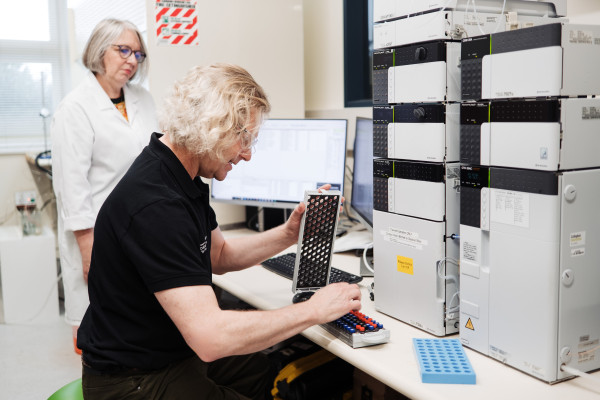
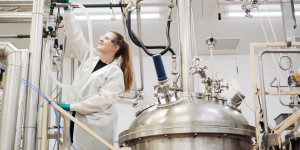
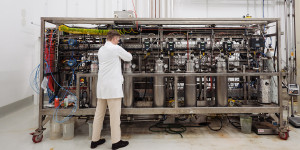
The NMR FoodScreener is a specialised food authentication instrument that can read the chemical fingerprint of a honey sample and match it against a global database of 40,000 authenticated honeys. It can do the same for wine, olive oil, and fruit – requiring only half a teaspoon of product, and at a cost starting from just $300 per test. (For wine, conventional tests measuring the same compounds require 2.5 litres and cost around $5,000.)
A single FoodScreener test can detect adulteration, dilution, mislabelling and false origin claims, revealing a huge amount of information from the tiny sample. “What's really unique is that it can tell you authenticity, provenance and quantitative results from a single measurement,” explains Andrew Lewis, NMR Facility Manager in the Biotechnologies Group.
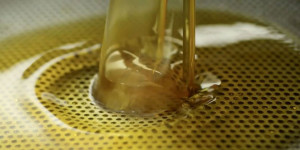
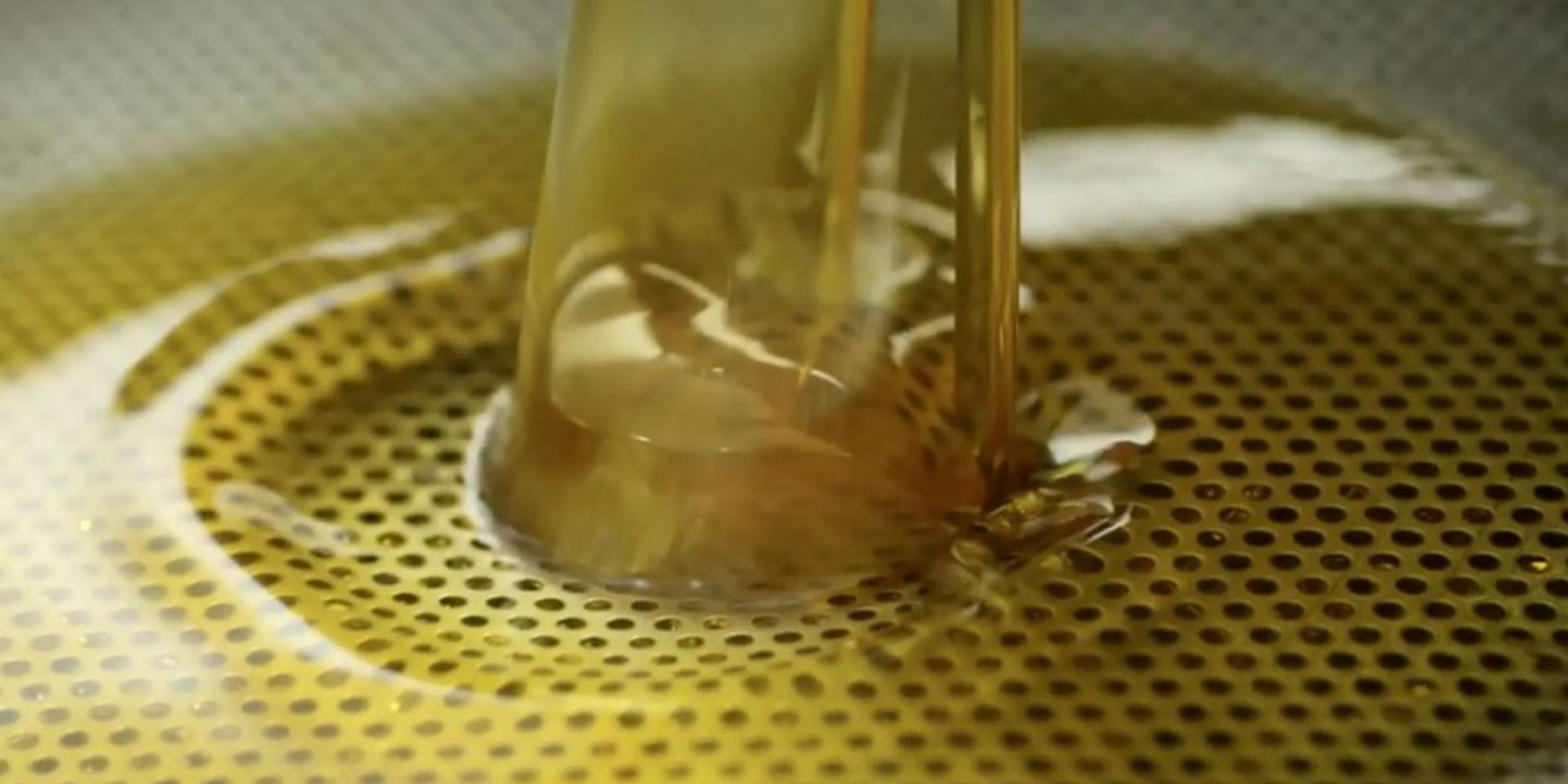
“For wine, we can tell what vintage it is, or if water or sugar has been added. For honeys, we can tell country of origin and what kind of flowers the bees collected nectar from. For fruit juices, we can tell if fruit has been frozen before it was juiced. For olive oil, we could prove the presence of healthy compounds so a health claim could be made on the label, adding value.”
The test identifies these chemical fingerprints using Nuclear Magnetic Resonance (NMR) spectroscopy to assess the ratios between up to 40 compounds. These chemical ratios are so distinct that by matching the chemical fingerprint of samples to the large international library, the FoodScreener can identify the provenance of some wine varieties not only by country, but by region – and for some samples, even by village or vineyard. The Biotechnologies Group currently partners with ALS, one of New Zealand's largest analytical laboratories, to offer FoodScreener honey testing commercially.
Proof of provenance adds value
This ability to pinpoint provenance is important for kiwifruit, New Zealand's most valuable horticultural export. In 2022, Zespri estimated that more hectares of its proprietary SunGold kiwifruit were being grown illegally in China than were licensed to growers in New Zealand. The cultivars are genetically identical clones, so DNA testing can’t distinguish a New Zealand-grown kiwifruit from one grown in China – but the soil and climate the fruit grow in produces a distinct chemical fingerprint that can be read by NMR.
SunGold kiwifruit grown in different areas of the North Island have been differentiated by chemical fingerprint in research done by the Biotechnologies Group with Plant and Food Research (both organisations subsequently merging into the Bioeconomy Science Institute). This capability could help protect an export crop worth more than $3.6 billion a year.
Proof of mānuka honey provenance is another opportunity for brand protection. In partnership with the Mānuka Charitable Trust, the Biotechnologies Group developed a reference library of 500 mānuka honey samples with known provenance, to be added to the global database to distinguish New Zealand mānuka honey from that produced in Australia from the same tree species. Funded by the Provincial Growth Fund, the project provides a template for protecting other taonga species, though funding to continue this mahi is still being sought.
Our national reputation influences value
The value of these exports isn’t just in the products themselves, but in our country’s trustworthy, ‘100% pure’ reputation. “We're seen as a high-quality producer,” says Lewis. “People are buying the qualities represented by New Zealand.”
That means when our reputation is damaged, the cost falls on everyone.
The 2008 melamine scandal, in which infant formula was adulterated to boost protein levels, caused the deaths of six infants, led Fonterra to write off a $200 million partnership, and eroded trust in New Zealand food brands beyond dairy. When a whistle-blower revealed a New Zealand wine exporter was adding sugar to wine in breach of EU regulations in 2018, the reputational damage extended across the entire wine sector. In each case (and there are more examples), rebuilding trust was a burden carried by entire sectors, not just the companies involved.
Despite this, central government budgets haven’t prioritised food fraud prevention and deterrence. The challenge is left with individual companies – but without regulatory requirements for authentication testing, there is limited commercial incentive to test voluntarily, particularly for bulk export products that are rebranded in the destination market.
Lewis suggests it will take either premium retailers demanding proof of authenticity, or regulatory action, to shift testing from occasional to routine. But with international food fraud increasing, the reputational cost of a future scandal could be measured in billions — while the cost of testing to proactively prove food authenticity, protect our export industries and deter fraud is $300 and half a teaspoon.