






Using onshore fermentation capacity has allowed Biostart to commercially develop a live bacteria biopesticide and returned its manufacturing back to New Zealand
A New Zealand grass grub treatment, previously fermented in Europe and then airfreighted to New Zealand under refrigeration, is now produced onshore – removing increasing costs of transport and reclaiming shelf life that was previously lost in transit.
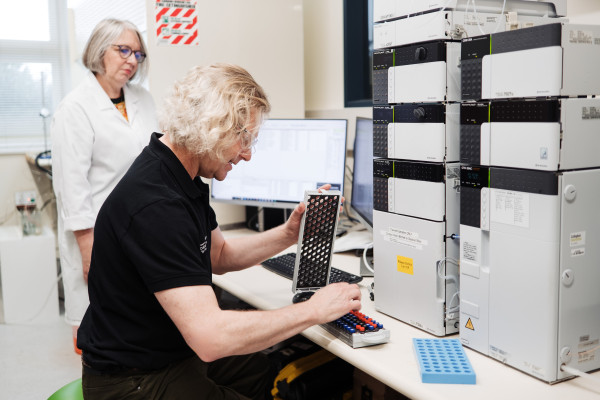
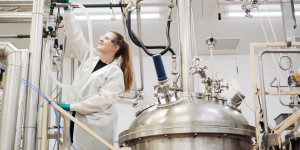
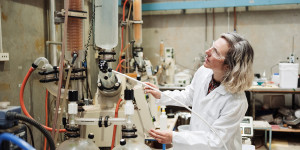
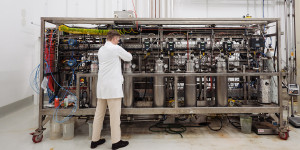
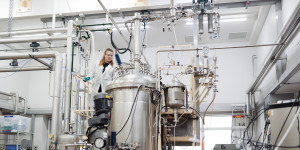
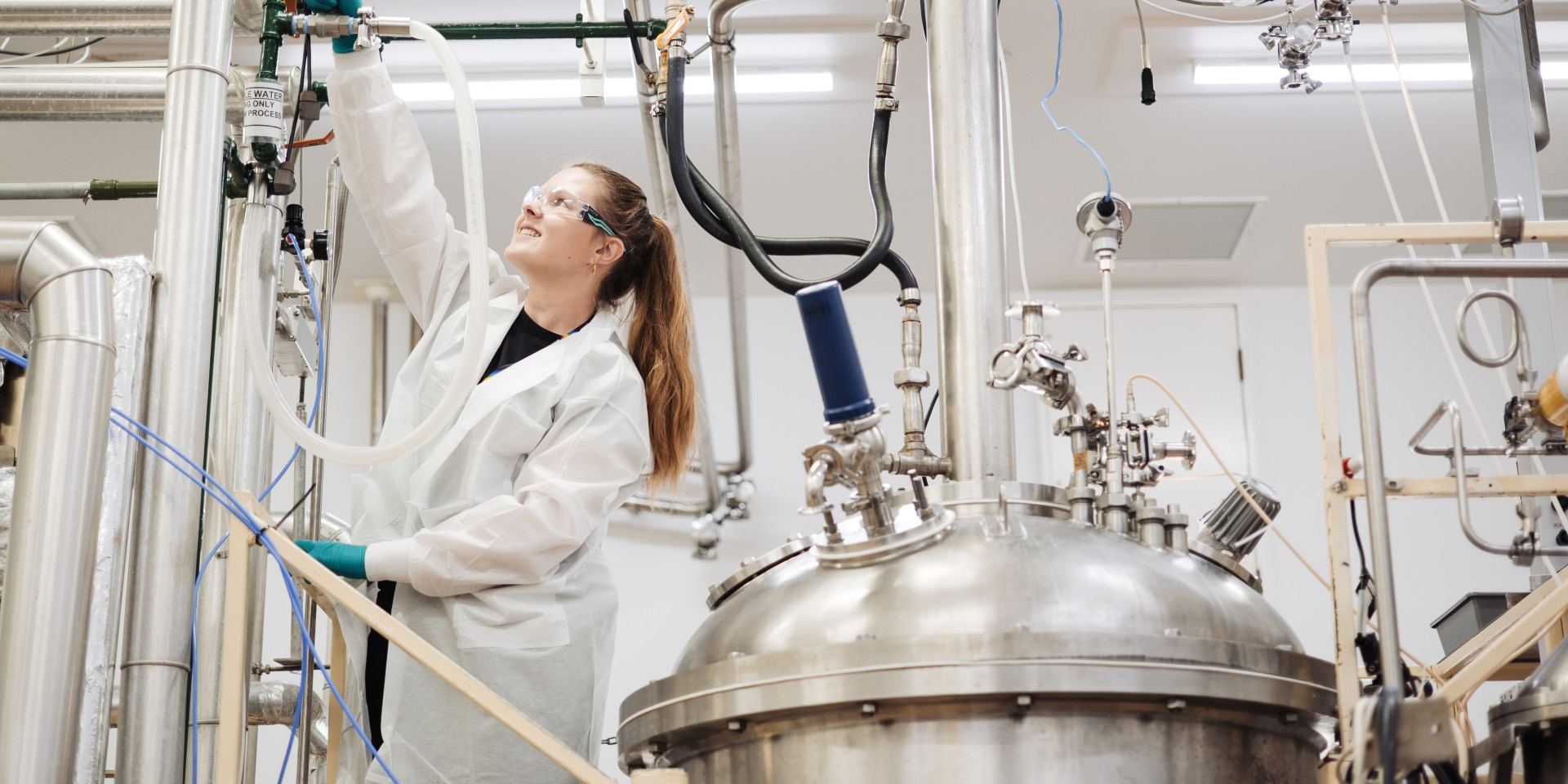
The Biotechnologies Group’s 1000-litre fermentation capability provided a more convenient alternative, enabling onshore process development and production of the biopesticide, BioShield Grass Grub Liquid, for New Zealand company BioStart.
Grass grub larvae are a major pest in New Zealand pastures and arable crops. BioShield Grass Grub Liquid contains the live bacterium Serratia entomophila, which causes amber disease specifically in grass grub larvae – without risk to livestock, birds or other organisms.
Because the product contains live microbes, it has a naturally short shelf life. Over the past five years, BioStart staff have worked closely with the Biotechnologies Group’s fermentation team to modify the fermentation process to enhance product stability and thereby extend shelf life, scale up domestic production to suit local market demands, and achieve consistent, commercially viable batches.
Work to improve formulation stability was primarily led by BioStart's own scientists, with the Biotechnologies Group supporting scale-up from small R&D runs to commercial volumes.
The advantage of the Biotechnologies Group partnership was that it meant BioStart didn’t need to build its own fermentation facility, says Dr Jerome Demmer, CEO of BioStart. To produce live microbe products at scale in New Zealand requires state-of-the-art, specialised fermentation equipment, which makes launching a live microbe product technically challenging and financially risky. A further challenge for BioShield is the product’s short shelf life and need to be refrigerated when shipped and stored.
“Fermentation equipment is expensive to purchase and set up, and finding skilled operating staff is a challenge,” says Demmer, who estimates that establishing in-house capability would have required up to a million dollars of equipment, plus the ongoing cost of qualified staff to operate it.
“The partnership allowed us to remove a lot of the financial risk from scaling this product up through the early commercialisation phase, and allowed our fermentation expert, Dr Chris Chilcott, to go and work alongside the Biotechnologies Group staff. If you don't have to build a facility, buy equipment and hire people full-time to run it – and it's hard to find those skilled people in New Zealand – then that's a significant benefit.”
The product will also save costs in the primary sector. Grass grubs and other invertebrate pests cost the pastoral industry an estimated $140 to 380 million a year on dairy farms, and $75 to 205 million for sheep and beef.
BioShield Grass Grub Liquid is currently the only ACVM-registered and certified organic biopesticide available for grass grub control in New Zealand. The current agrichemical alternatives are organophosphate products that are being rapidly phased out in New Zealand. The EPA formally banned chlorpyrifos in July 2025, which farmers must stop using by July 2026. Agriculture use of diazinon, the only other insecticide registered for grass grub control in established pasture, will be banned by 2028.
Without these chemical options, availability of a biological alternative – with a reliable domestic supply and no cold-chain import dependency – is good news for Kiwi farmers managing pastures and newly planted vineyards.
It's also a success story for New Zealand science. Serratia entomophila was first identified by researchers at DSIR, with research carried forward at MAFTech and later at AgResearch. BioStart acquired the commercialisation rights in 2017, and the Biotechnologies Group's fermentation capability helped make it viable at scale, putting over three decades of New Zealand science in the hands of farmers.
The science behind BioShield is New Zealand's own, so it’s been satisfying to help BioStart return manufacturing here. We love working with small companies, to give them access to commercial-scale fermentation facilities and scale-up expertise they couldn't otherwise access. That's how you build a bioeconomy
David Clarke, business manager at the Biotechnologies Group
Discover how our Biotechnology Group can support your goals
Get in touch today https://www.callaghaninnovation.govt.nz/products/solve/