







How Alpha Group scaled medicinal mushroom fermentation capability into international infrastructure and intellectual property
When health supplement company Alpha Group broke ground on a new $115 million biotech manufacturing facility in China's Fujian region last year, it marked a milestone almost unimaginable when the company began in a West Auckland garage nearly 30 years ago. Today Alpha Group is one of New Zealand's largest health companies in China, and the fermentation process developed in partnership with the Biotechnologies Group is a foundation the company is built on.
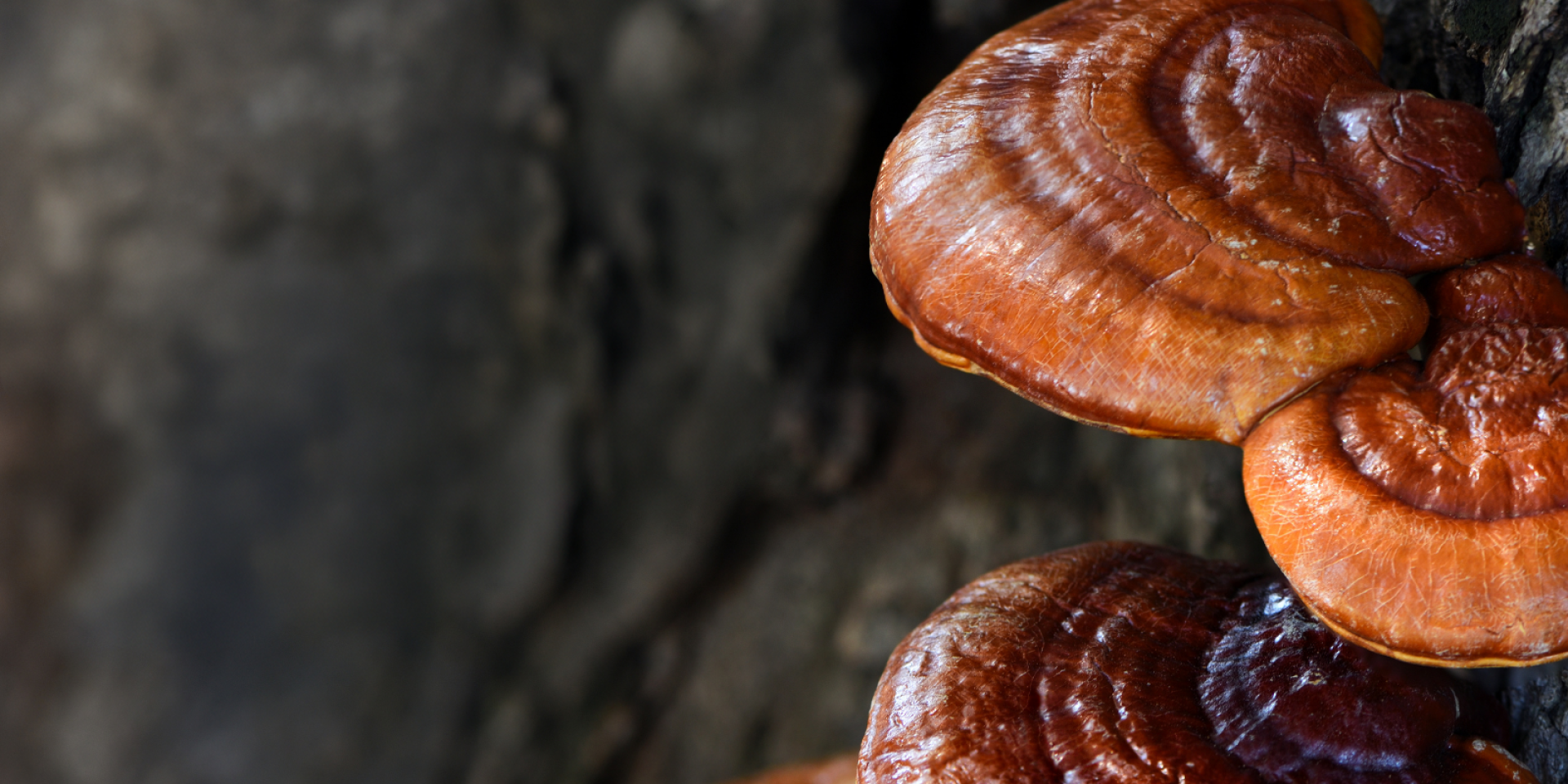
That fermentation process produces Ganoderma Lingzhi (Reishi mushroom) mycelia in under three weeks, about 90% faster than previously. It transformed a six-month crop with land and weather constraints into a patented, reproducible, scalable fermentation process.
The commercial outcomes are substantial: Alpha has invested over $830 million in developing a global manufacturing infrastructure footprint of over 119 hectares. The China facility alone is expected to generate more than NZ$225 million in annual revenue once complete.
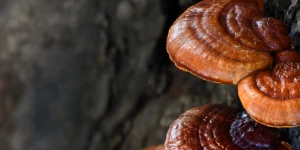
Alpha Group produces premium health supplements from bioactive natural extracts. A core ingredient in their product line is Ganoderma Lingzhi, a mushroom used for over 2000 years in Chinese medicine, with growing demand in global wellness and functional health markets.
In 2016, they came to the Biotechnologies Group with a problem: the conventional production of Ganoderma Lingzhi mushrooms was taking up to six months and was constrained by land availability and seasonal variability, limiting production scale and quality consistency.
To overcome these long-standing barriers to traditional mushroom production, Alpha Group partnered with the Biotechnologies Group (then within Callaghan Innovation) and Massey University. The partnership developed a novel submerged fermentation process for producing Ganoderma Lingzhi mycelia, from which the medicinal ingredients are extracted.
Patented by Alpha Group, the process is a faster, more scalable solution that improves quality, yield and extraction of target bioactives.
Commercial success
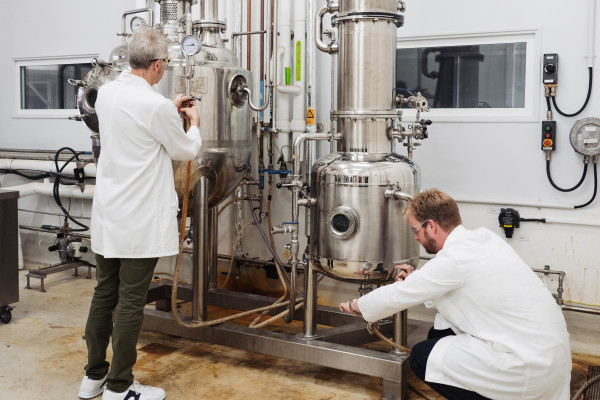
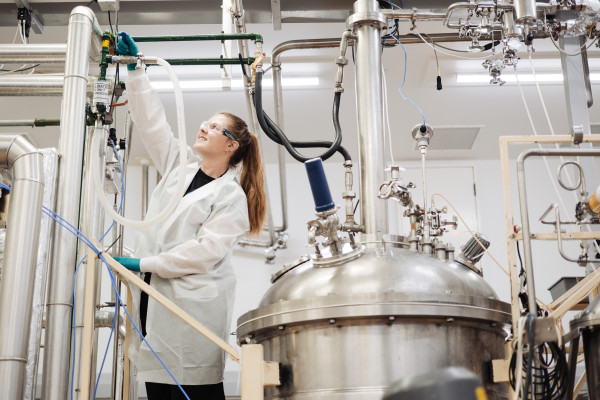
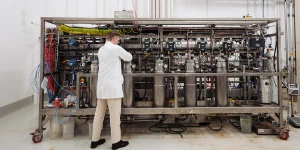
Alpha Group now operates a purpose-built, world-first medicinal mushroom fermentation plant in Auckland that can produce Ganoderma Lingzhi mycelia in under three weeks.
The patented fermentation process is being scaled and improvements iterated in the $115 million facility currently under construction in China, integrating advanced R&D, testing, treatment and production across 60,000 square metres.
Michael Huang, Alpha Group general manager (NZ), says the new facility unlocks exponential growth potential for New Zealand’s fermentation sector. “It’s creating a transnational innovation ecosystem where New Zealand science drives offshore commercial outcomes, with returns fed back into the New Zealand economy,” he says.
Today, the Ganoderma ingredient powers GanoPoly O+, an immune support supplement now ready for global markets.
This collaboration helped us convert R&D into world-first infrastructure. It’s the kind of partnership that builds industries.
Sammy Wong, R&D Lead, Alpha Group
Designing and validating a new fermentation process
Fermentation was a brand-new approach for the mushroom, says Shuguang Zhang, the technical lead of the project at Biotechnologies Group. “When we achieved a reasonably high yield of biomass at 1-litre scale with bioreactors, we know it was great, and it would be achievable too for the follow scale-up stages.”
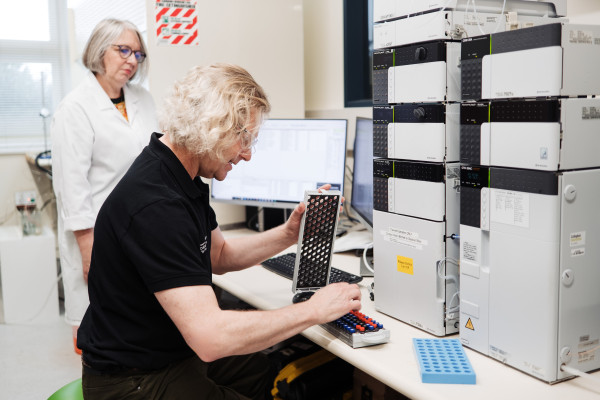
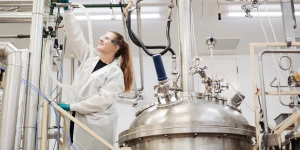
Over four years, the Biotechnologies Group, drawing on expertise in fermentation, natural product chemistry, bioprocess engineering, and product development, provided support from laboratory to facility, working alongside Alpha Group and Massey University to:
- transfer and verify Alpha Group’s proprietary Ganoderma production strain
- design and optimise a submerged fermentation process tailored to the strain
- develop upstream and downstream processes focused on increasing yield and bioactive concentration, conducting all work in work a PC2 [Physical Containment Level 2] environment
- validate nutrition and bioactivity against traditional mushroom growing benchmarks
- consult on the technical design and build of an Auckland-based fermentation facility
- document the process to support the patent application
- advise on EPA and MPI compliance and facility standards for working with fungal species
This approach accelerated production and improved the quality and yield of key bioactive compounds, including polysaccharides and triterpenes that have demonstrated health benefits such as anti-inflammatory, antioxidant and anticancer properties.
Alpha Group founder Professor Yihuai Gao, a globally recognised researcher in medicinal fungi and honorary fellow at Massey University's Riddet Institute, sees the fermentation method as a platform that can be adapted to other medicinal fungi, plants and marine compounds.
“Not only can we unlock new export streams from organisms that are difficult or impossible to cultivate here, we can dramatically accelerate research into other plants and fungi that support human health,” he says.
“That opens the door to a whole new category of science-led exports for New Zealand.”
This project demonstrates how end-to-end R&D partnerships can turn scientific potential into commercial reality. Science commercialisation isn’t just about breakthroughs – it’s also about building capability within companies to become globally competitive. That’s what this project delivered.
Dr Paul Rose, Biotechnologies Group Leader, Bioeconomy Science Institute
End-to-end solutions for product and process development
We bring together teams with diverse expertise to tackle unique challenges and deliver stronger solutions. Chat to us today to discuss how we can support your process development, optimisation and scale-up.