







New processing technology could help companies produce the next generation of high-value marine products, while keeping the entire value chain in New Zealand
At a glance
- The Cyber-Marine research programme developed new marine extraction technology to help produce a wider range of high-value oils from seafood biomass.
- The Biotechnologies Group developed a new supercritical CO2-based extraction process, GXL, alongside improved DME extraction capability and food-grade production under a Risk Management Plan.
- The technology has been demonstrated at pilot scale, tested across multiple marine species, and is now being implemented by industry.
Unlocking more value from marine biomass
Mussels, hoki and jack mackerel aren’t just delicious – they contain fatty acids and other compounds with useful health benefits, well-suited for use in dietary supplements and nutraceutical products. New processing technology developed by the Cyber-Marine research programme is now making it possible to produce a wider range of high-value oils from every catch.
The five-year Cyber-Marine programme developed innovative ways to create a “fish factory of the future” with technology to analyse incoming catch, control processing, and extract more value from Aotearoa New Zealand’s $2.2 billion seafood sector.
“There is huge potential to produce a new generation of high-value marine extracts by utilising all the biomass harvested by fisheries and aquaculture”, says Owen Catchpole, Chief Engineer at the Biotechnologies Group and a Callaghan Innovation project lead for Cyber-Marine. The New Zealand Aquaculture Development Plan suggests that maximising the value of existing aquaculture alone could contribute up to $1.5 billion in annual revenue by 2035.
“Marine lipid ingredients can be produced at a smallish volume to create high-value dietary supplements and nutraceuticals,” says Catchpole. “These are ideal for export because the transportation costs are minimal – and the revenue is significant.” The entire value chain can be based in New Zealand rather than shipping raw materials offshore for processing.
Greenshell mussels, our largest aquaculture species, already yield extremely high-value oil extracts through supercritical CO2 extraction, with mussel oil worth roughly a thousand times more than the raw mussels themselves. Research and development into supercritical CO2 extraction began in New Zealand in 1986, first under DSIR, then IRL, then through Biotechnologies Group as part of Callaghan Innovation. This has since become an established industrial process, extracting extremely pure, nature-identical oils, leaving behind material ideal for use in protein-rich products.
A new process for extracting a broader range of marine lipids
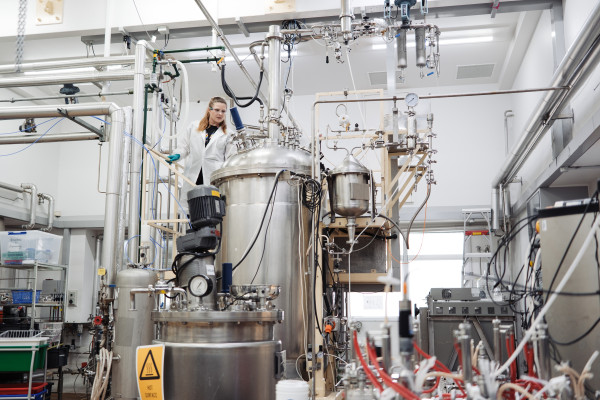
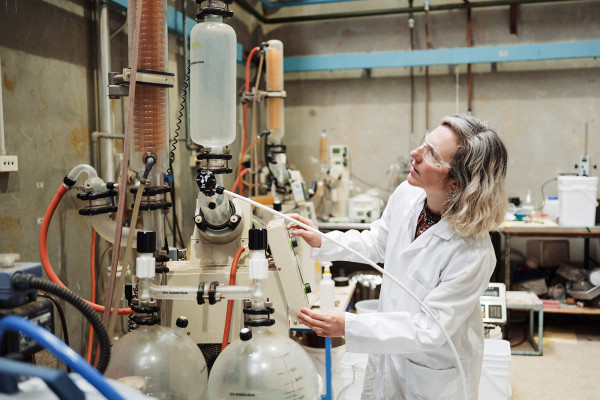
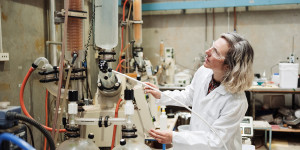
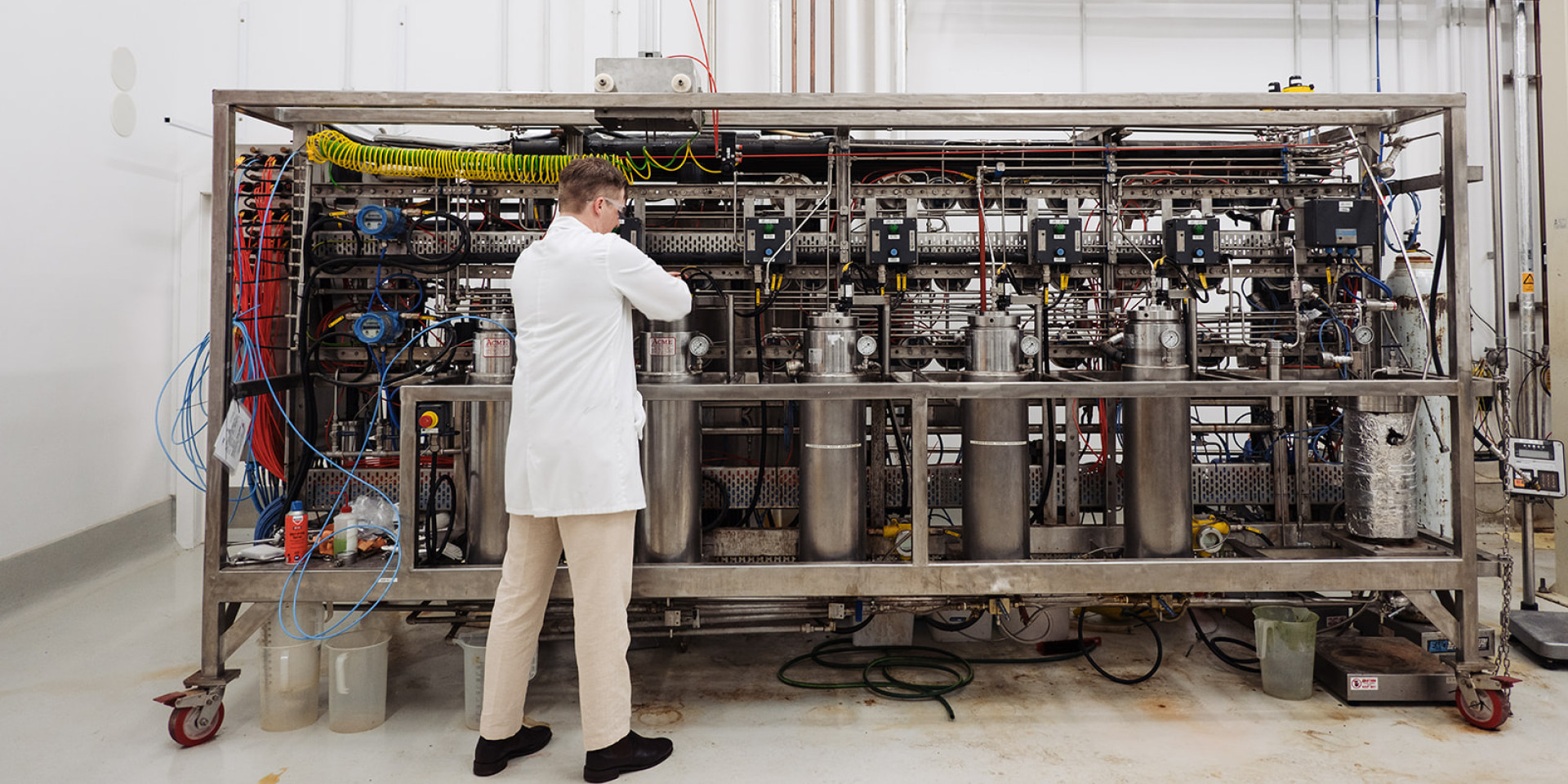
However, existing technology couldn't access the full range of phospholipids, rich in omega-3 fatty acids, found in marine biomass, so the Biotechnologies Group food processing technology and process engineering teams developed a new supercritical CO2-based extraction process as part of the Cyber-Marine programme. This work also improved existing dimethyl ether (DME) extraction technology and capability, and enabled food-grade marine lipid extracts to be produced under a Risk Management Plan.
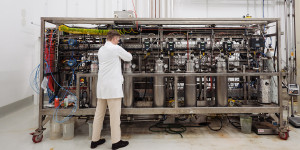
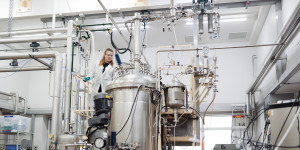
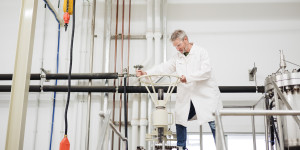
The new Gas eXpanded Liquid (GXL) extraction process uses CO₂ plus a high proportion of ethanol as a co-solvent. The process has been demonstrated at pilot scale for New Zealand marine species, and is now ready to be adopted at an industrial scale. Alongside creating the pilot scale process, the Biotechnologies Group’s Lipids and Natural Products experts provided specialist analytical capability, characterising raw materials and prototype products. “This extraction process extracts a much broader range of high-value lipids,” says Catchpole.
A collaborative programme to build the fish factory of the future
The Cyber-Marine programme (formally known as “Cyber-physical seafood systems”) ran from 2020–2025. It was funded by MBIE and led by the Bioeconomy Science Institute (formally Plant and Food Research) in partnership with the Biotechnologies Group at Callaghan Innovation, Victoria University of Wellington, University of Otago and Deakin University (Australia). The Biotechnologies Group will be integrated into the Bioeconomy Science Institute later in 2026.
Chemistry, engineering and AI computer science experts from across the partner organisations worked with industry partners, who contributed raw materials, factory time and expertise.
The collaborative research programme developed a practical plan to locate new specialist extraction facilities near existing fish processing plants, with AI helping run the factories by tailoring extraction procedures to the composition of each species.
“My job as chief engineer was to look at how the pieces of the jigsaw puzzle fit together and find the people who are experts at their piece of the puzzle”
Owen Catchpole, Biotechnologies Group Chief Engineer
Moving toward industry adoption
The industry response has been positive. Companies can now evaluate processing pathways with full yield data and product datasheets. The approach has been tested beyond the original three exemplar species, on tuna heads and salmon organs, demonstrating transferability.
GXL is now being implemented by industry, and the DME demonstration-scale plant at Biotechnologies Group’s Gracefield site is positioned to help companies pilot production of new food-grade products before investing in full-scale operations.
“This scale of plant allows markets to be established and de-risking before investing in larger-scale plant,” says Catchpole. “We’re looking forward to seeing New Zealand companies produce a range of high-value marine products that weren’t previously possible. We've got all the know-how here.”
More information
For more information about the programme's technologies and how they might apply to your marine biomass, contact Owen Catchpole at owen.catchpole@callaghaninnovation.govt.nz