















The hip side of being a New Zealand startup
If it wasn’t for a brazen lunchtime theft of a 3D body scanner, Ju Zhang is unlikely to have co-founded a company that is revolutionising the work of orthopaedic surgeons.
The initial focus of Zhang’s PhD at the University of Auckland was on analysing the shapes of human bodies, but the scanner theft forced a rethink and he began to analyse the shapes of bones.
Zhang is an engineer at heart and what he likes most of all is solving problems – and that’s essentially what Formus Labs is all about.
“We spun out of the University of Auckland’s Bioengineering Institute in 2017 with what some people would call a science experiment, but it was something we could demonstrate to potential customers.”
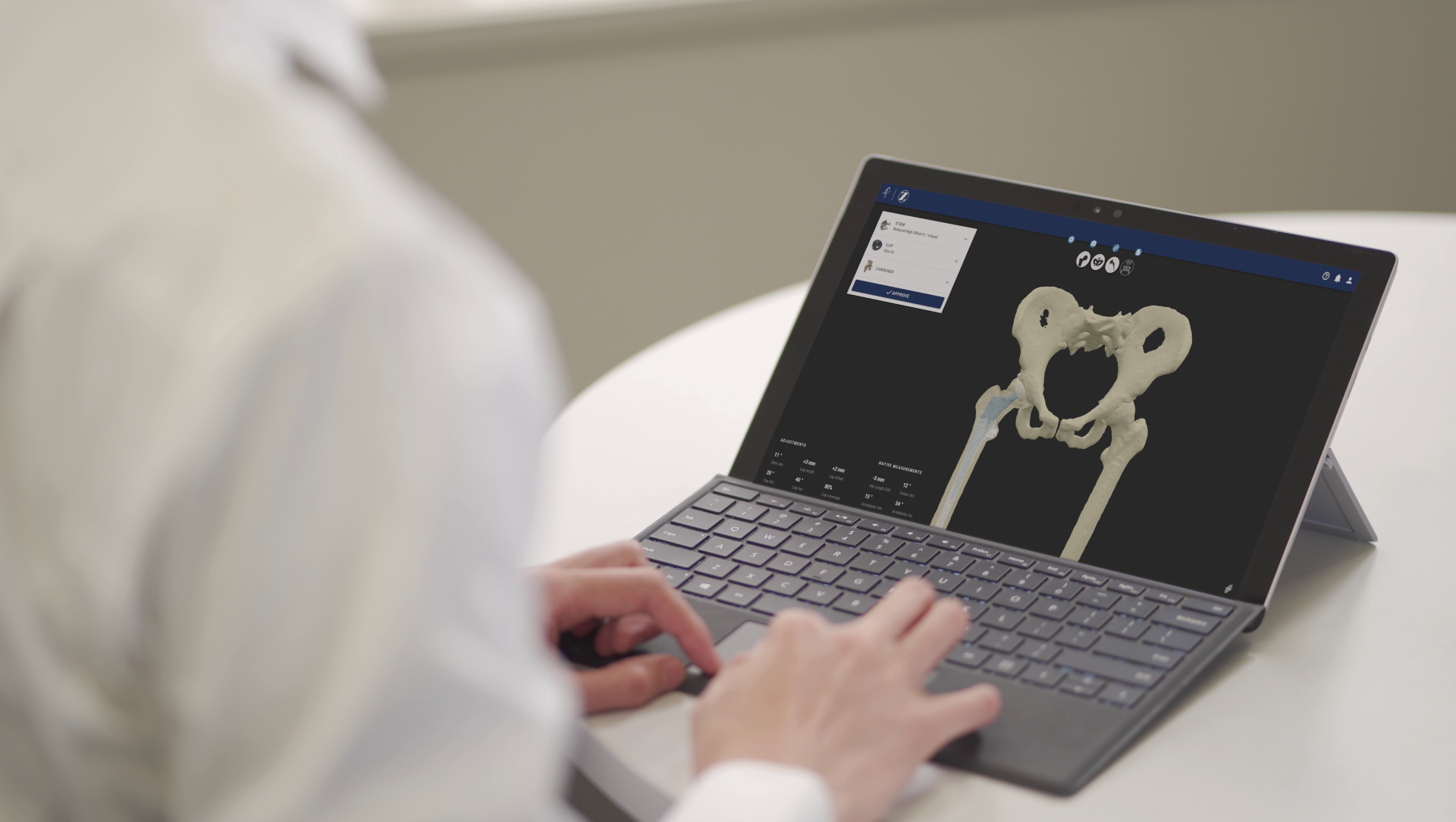
Formus Labs builds software that uses computational biomechanics and artificial intelligence (AI) to help orthopaedic surgeons deliver better outcomes for patients needing joint replacements. The software does the pre-operative planning for surgeons who often don’t have time to do it, analysing X-rays and CT scans to help select the right components for surgery and the position in which they should be placed.
The process has been automated, which enables Formus Labs to generate a bespoke plan in about 40 minutes. So far Formus Labs has completed almost 2,000 surgical plans for patients in Australia and New Zealand. However, in May the company received FDA clearance for its software in the United States where the company is poised to offer the first AI automated assisted planning software for hip replacement surgery.
The breakthrough came after a rigorous two-year process and marked new territory for the FDA in the field of AI automated image analysis. While the product was being scrutinised, Formus Labs was working hard in the United States talking to key surgeons at many large hospitals about what it could offer.
“We’ve got some pretty heavy hitters lined up to use the software at some of the biggest orthopaedic hospitals in the US. Beyond them is a very large segment of surgeons who don’t do pre-operative planning or do it in a very rudimentary way because they don’t have the time or tools to do it. That’s the key segment we’re going after because it will make their jobs of delivering better patient outcomes a lot easier.”
There’s a really good innovation ecosystem here. We may be small but there’s a concentration of talent.
"With FDA clearance now behind it, Formus Labs is looking at a Series A capital raising round next year and Zhang also has plans to go beyond implants and bones to look at what may be able to be done with the muscles, ligaments and tendons surrounding joints.
Callaghan Innovation is likely to play a role in that work, as it has since the very early days of the company.
“Callaghan Innovation has been with us since the start, with research and development [R&D] grants and intern experience grants, and it’s funded PhD students for us as well. Some of those earliest grants helped us fund R&D into AI and other components that led to us being able to automate the whole process.”
Zhang is a strong advocate for the Auckland Bioengineering Institute, which he says is one of the largest of its type in the world and producing exceptionally talented graduates who have joined Formus Labs via Callaghan Innovation grants.
There is another key advantage Zhang sees to being based in Aotearoa New Zealand: here, there are fewer regulatory hurdles for developing medical devices, which provides the opportunity for faster innovation.
“We can do a prototype and get it tested in a clinic, which makes it a faster innovation iteration loop. There’s a really good innovation ecosystem here. We may be small but there’s a concentration of talent, and a lot of resources around, like Callaghan Innovation, to help.”
2024 update
Formus, the company that emerged from a lunchtime mishap and a bold pivot at the Auckland Bioengineering Institute, has continued to build on its reputation for innovation in orthopaedic surgery. Over the past year, the company has achieved several significant milestones, reflecting its commitment to enabling personalised orthopaedics at scale by revolutionising the pre-operative planning process for joint replacement surgeries.
One of the most notable achievements was the FDA’s clearance of the Formus Hip platform, making it the first automated radiological image processing software for hip replacement pre-op planning in the United States. This breakthrough followed a rigorous approval process and positions Formus at the forefront of AI-driven surgical planning, delivering precise 3D plans in under an hour. This advancement has the potential to significantly ease the workload of surgeons while enhancing patient outcomes – a core mission that has guided the company since its inception.
Building on this momentum, Formus has successfully raised US $8 million to date, fuelling further product development and international expansion. A key partnership with global medical technology leader Zimmer Biomet is now expanding across Asia-Pacific, taking Formus’s cutting-edge solutions to surgeons beyond Australia and New Zealand. This collaboration is a testament to the growing recognition of their role in transforming orthopaedic care, offering tools that not only save time, but also reduce the complexity and cost associated with joint replacement surgeries.
The company also recently introduced a tech demo of its latest innovation, Formus Navigator, at the International Symposium on Technology in Arthroplasty, in Nashville TN. Still in development, this new software provides novel insights into patient muscle function that help surgeons avoid soft-tissue problems affecting up to 30% of all joint-replacement patients. Navigator sits at the next frontier of orthopaedics and will ensure that Formus is at the forefront of the industry.
With its roots firmly planted in New Zealand’s robust innovation ecosystem, supported by Callaghan Innovation, Formus is poised to continue its upward trajectory. From its academic roots to a global leader in surgical planning, the company remains dedicated to solving the complex challenges faced by orthopaedic surgeons and improving patient outcomes worldwide.
At a glance
- Founded in 2017
- Founded by Ju Zhang (CEO) and Thor Besier
- Based in Auckland
- Software builder using computational biomechanics and AI to help orthopaedic surgeons deliver better outcomes for patients needing joint replacements
- Almost 2,000 patient plans, capital raise of $10 million so far, eight patent applications lodged
- Visit website
Callaghan Innovation impact
- R&D grants for AI leading to an automated process
- R&D Experience Grants
- Business innovation advice